Still Sending WhatsApp Messages Manually? Here’s What You Can Automate
Reminders, follow-ups and routine updates follow a pattern. Here is how WhatsApp marketing automation takes over the repetitive part without making your messages feel cold.
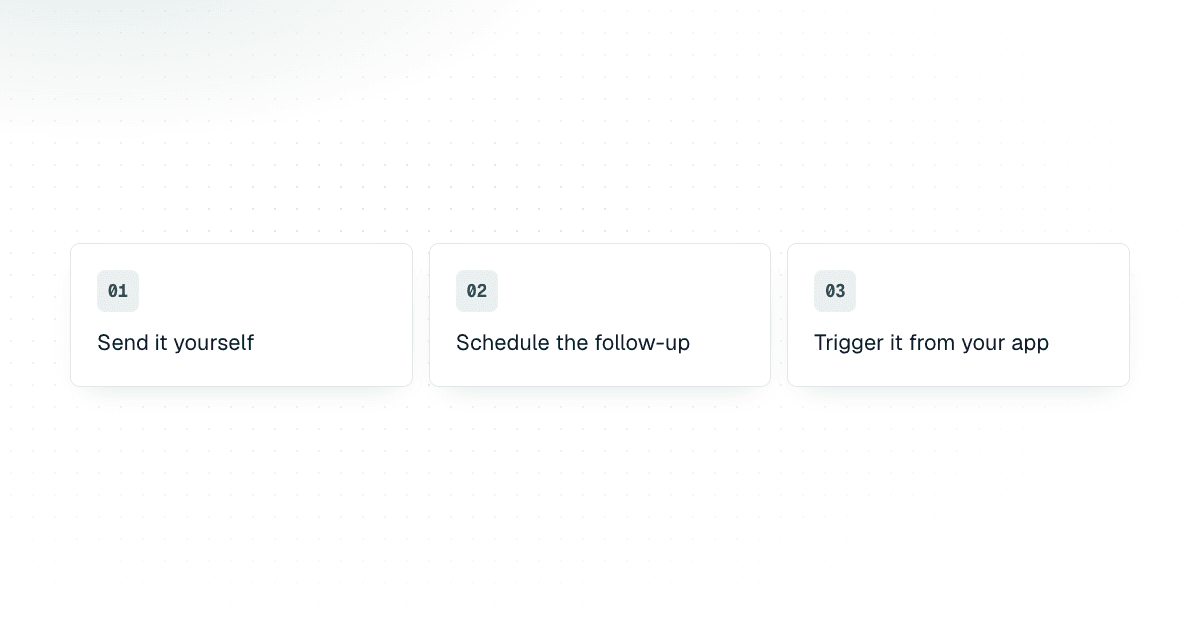
There is a kind of work that barely registers as work until you have done it fifty times. Open WhatsApp, find the right contact, copy the message, change a name or a date, send it, move on to the next person. Then do it again tomorrow. No single message takes long. The problem is the time, attention and mental effort behind all of them added together. The right WhatsApp marketing automation handles the repetitive part without making customer communication feel cold or impersonal.
Look at what you already send
The easiest automation opportunities are already in your sent messages. Appointment reminders, follow-ups, event details, order updates, payment notices, regular announcements and routine check-ins all follow a pattern. The wording changes slightly; the purpose does not.
That is a good signal. Instead of treating every message as a fresh task, you can build a process around communication that already happens regularly. It is a far more practical starting point than trying to automate everything at once.
Schedule messages before the rush
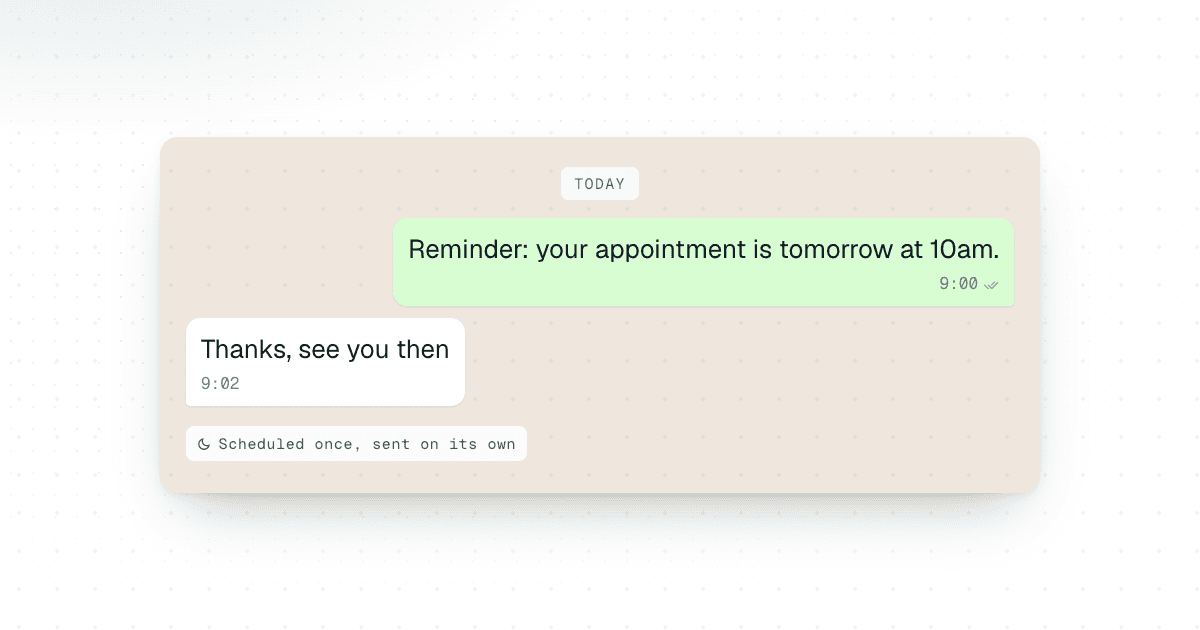
Manual messaging often goes wrong because of timing. You remember at 9 p.m. a reminder that needs to go out the next morning. A weekly update slips because the day got busy. Someone has to stop what they are doing to send a message that was predictable from the start.
Scheduling removes that scramble. You write the message when it suits you and set it to arrive when the recipient needs it. With Chatmaid Schedule it goes out from your own number, on time, even if your phone is off. For recurring communication, that saves a surprising amount of day-to-day effort.
Personalization still matters
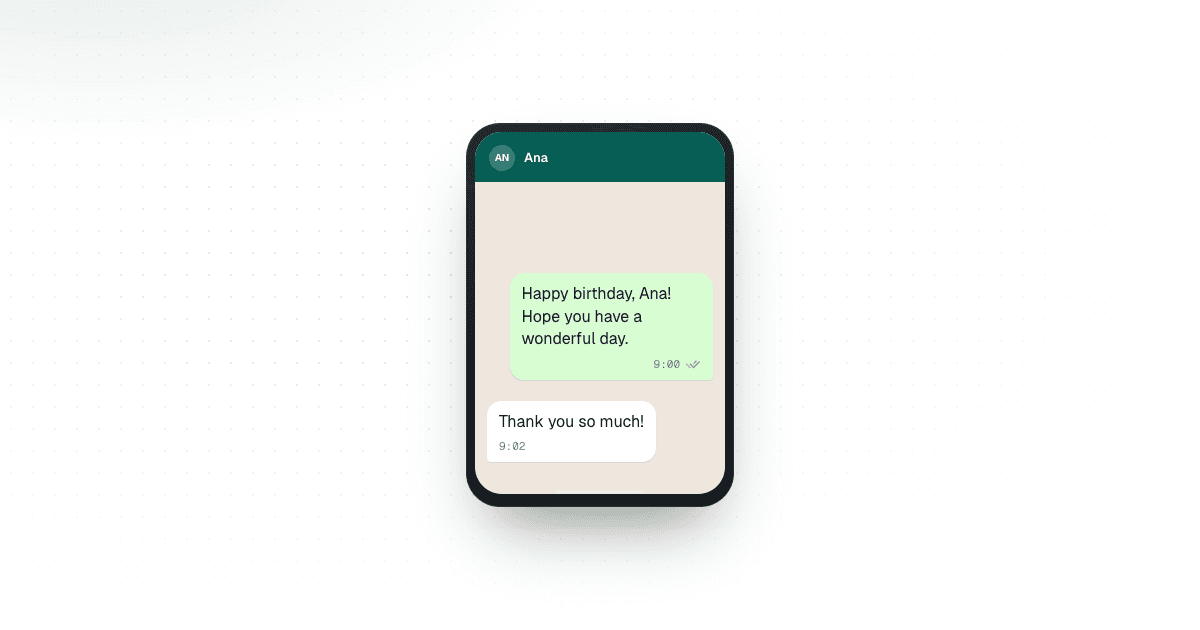
Automation gets a bad reputation when it produces messages written for nobody in particular. That is not inevitable. You can keep one message format and fill in the details that make it relevant to each person: a name, an appointment time, a booking date, an order number.
Chatmaid Web does this from a contact list: upload it, write one message with variables, and each recipient gets their own version. The mechanics are automated, but every message still has a reason to be there.
Start with the tasks that repeat
Look at the messages that keep pulling someone away from other work. You do not need a complicated strategy to find them; a quick review of last week will show which tasks are predictable enough to handle differently:
- Appointment reminders: prepare them ahead of time instead of relying on someone to remember each one.
- Customer follow-ups: keep routine follow-ups from disappearing when the day gets busy.
- Event updates: schedule dates, times and locations around the event timeline.
- Recurring communication: set weekly or monthly messages once instead of recreating them each time.
- Personalized notifications: include customer-specific details without rebuilding every message by hand.
- Internal updates: handle routine team communication without adding another chore to someone’s day.
The common thread is predictability. If the purpose, timing and basic content are clear, automation is probably useful. A conversation that needs judgment or a genuinely personal reply is different, and that is where a person should stay involved.
Connect WhatsApp to your application
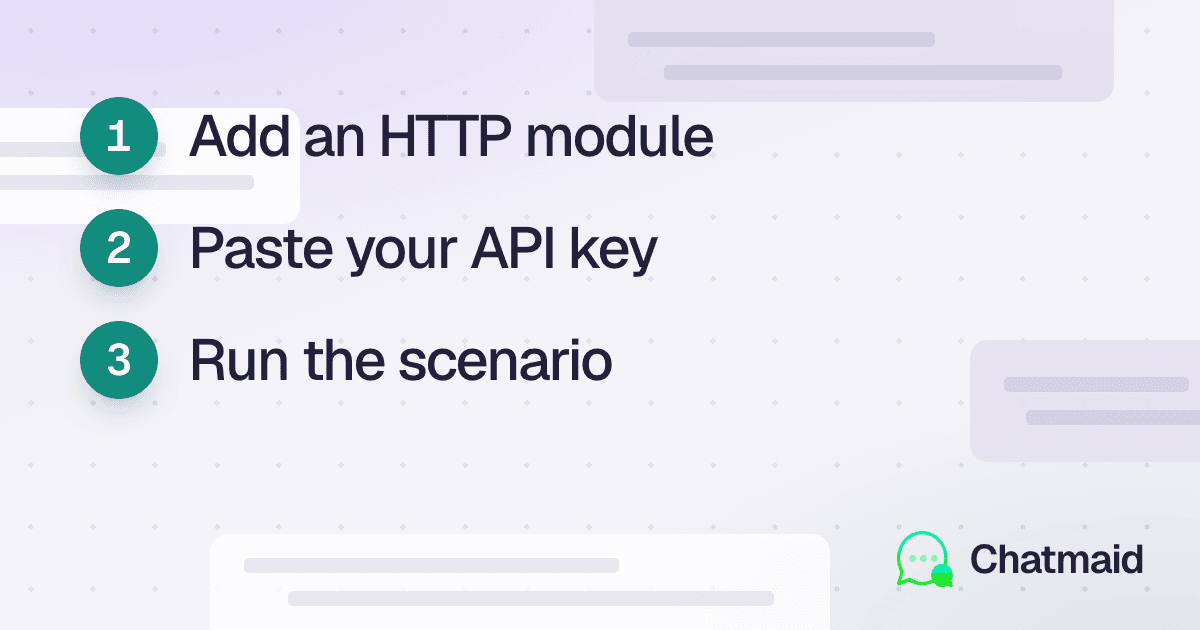
Scheduling covers one side of automation. An API covers the other: messages that should go out because something happened in another system. An application might notify a customer when an order ships, confirm that a payment went through, or send a follow-up after a booking.
With Chatmaid Developers, a developer can send messages with the WhatsApp API in a single call when those events happen. Webhooks then report back when a message is delivered or read, so the application knows what happened to it.
Automate the work, not every conversation
Once automation is available it is easy to get carried away. Be selective. A good automated message has a clear purpose, arrives at a sensible time, and gives the recipient something they expect or need. Sending more messages just because a system makes it easy does not improve communication.
The better approach is usually quieter: let automation handle predictable work in the background, and keep people on the conversations where context, judgment or a personal reply matters.
Conclusion
The value of WhatsApp marketing automation is not sending as many messages as possible. It is getting repetitive communication out of the way so you can focus on work that cannot be scheduled. With Chatmaid you can schedule messages, personalize them for a whole list, set up recurring sends, and connect WhatsApp to your own applications.
If you are still sending the same WhatsApp messages by hand, look through last week’s conversations and find the tasks that kept coming back. Pick one with a predictable purpose and schedule, and start there. Explore Chatmaid to see which app fits the way you already work.
FAQs
What types of WhatsApp messages can be automated?
Appointment reminders, customer follow-ups, event updates, recurring messages, personalized notifications and routine internal updates.
Can automated WhatsApp messages still be personalized?
Yes. Messages can include details such as names, appointment times, booking dates and order numbers for each recipient.
Can WhatsApp messages be scheduled in advance?
Yes. You can write a message ahead of time and schedule it for a specific date and time, once or on a daily, weekly or monthly repeat.
Can an API connect WhatsApp messaging to another application?
Yes. An API lets an application send WhatsApp messages when specific events happen, such as an order shipping or a booking being made.
Should every WhatsApp conversation be automated?
No. Conversations that need judgment, context or a personal reply are better handled by a person.